AI Knowledge Management
System for Healthcare


Technology We Used



Project Overview
A healthcare organization in the UK needed one place to search clinical guidelines, treatment protocols, research papers, and institutional documents instead of hunting across EHR tools and shared repositories. Starling Elevate built an AI knowledge management system that organizes medical content and returns trusted answers through natural-language search.
The seven-month project used knowledge graphs, RAG, LLMs, and workflow automation to connect related clinical resources, support context-aware queries, and enforce role-based access for doctors, nurses, and administrators.
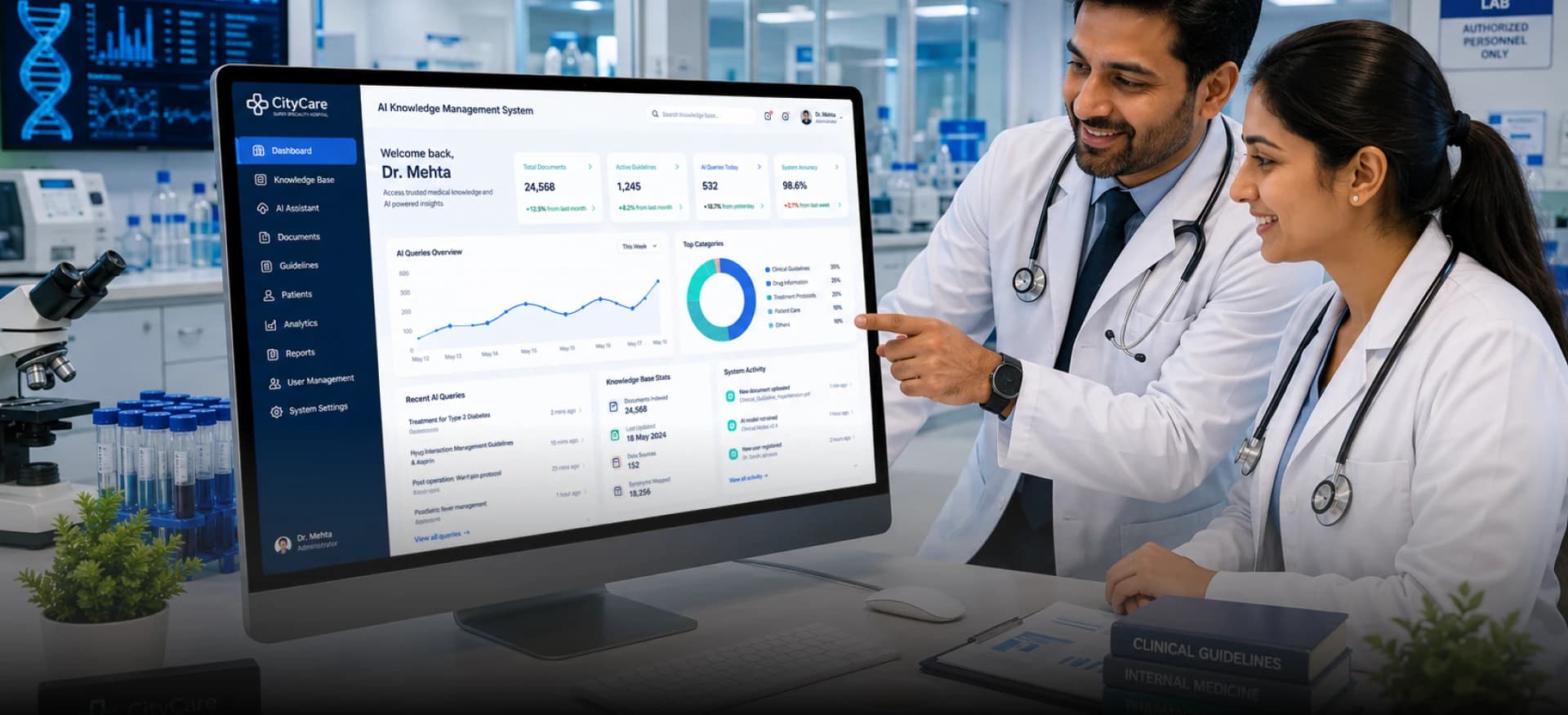
Care teams can find treatment guidelines, policy records, and research material faster while administrators manage ingestion, tagging, and permissions from a central dashboard.
This page covers the client context, platform design, delivered capabilities, business results, and common questions about AI knowledge management for healthcare.
Why Healthcare Organizations Needed an AI Knowledge Management System
Clinical knowledge lived across EHR systems, document stores, and internal repositories, but teams still struggled to find reliable medical information quickly.

Clinical knowledge was scattered across multiple systems, documents, and repositories.

Healthcare professionals spent too much time searching for accurate medical information.

Inconsistent access to treatment guidelines affected clinical decision-making.
Keeping medical research and healthcare regulations current required heavy manual effort.
Department knowledge sharing lacked one centralized and structured approach.

Different care teams needed secure, role-based access to critical healthcare information.

Unlock Smarter
Healthcare Knowledge
Centralize medical knowledge with AI-powered information management.
How We Built the AI Knowledge Management System
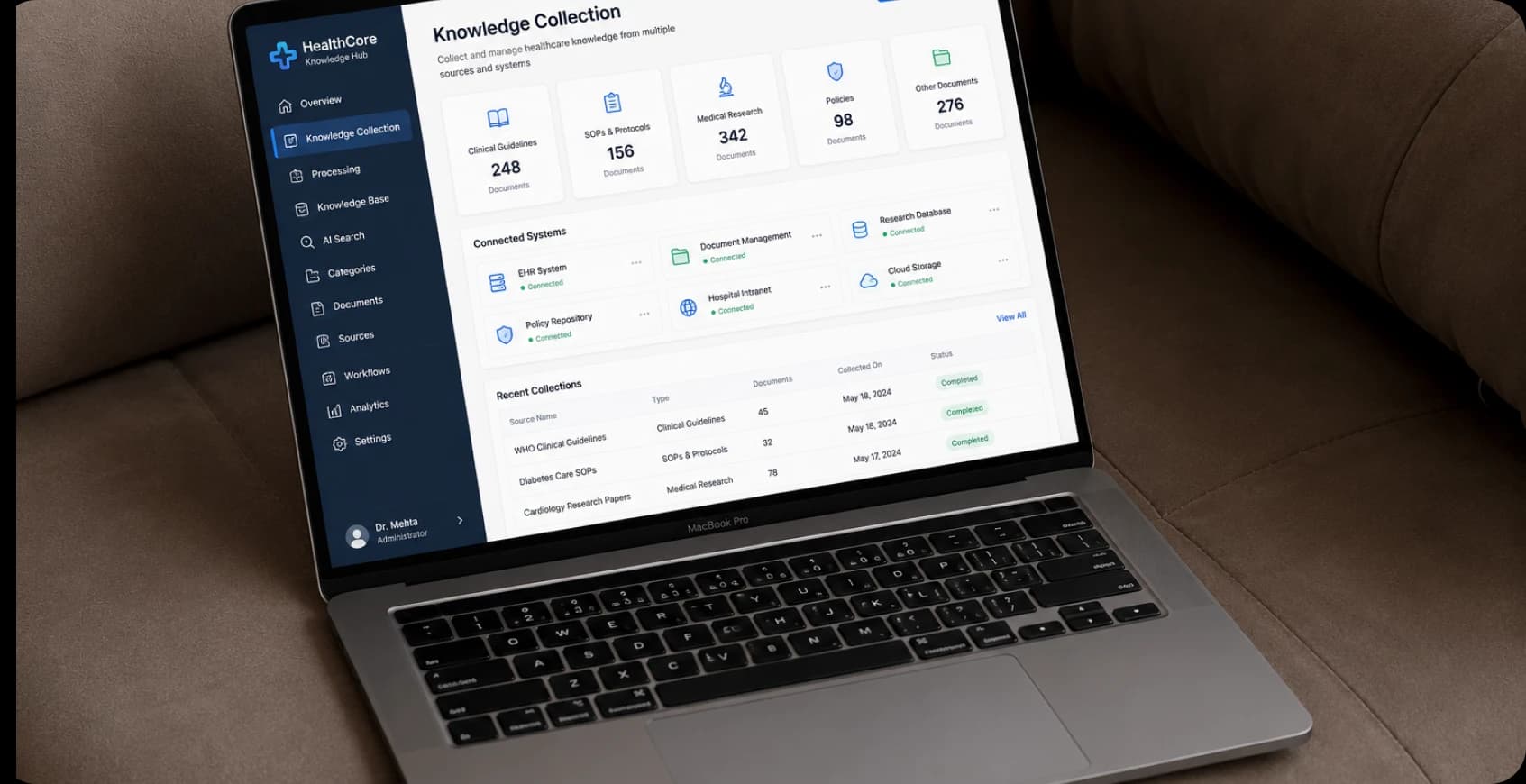
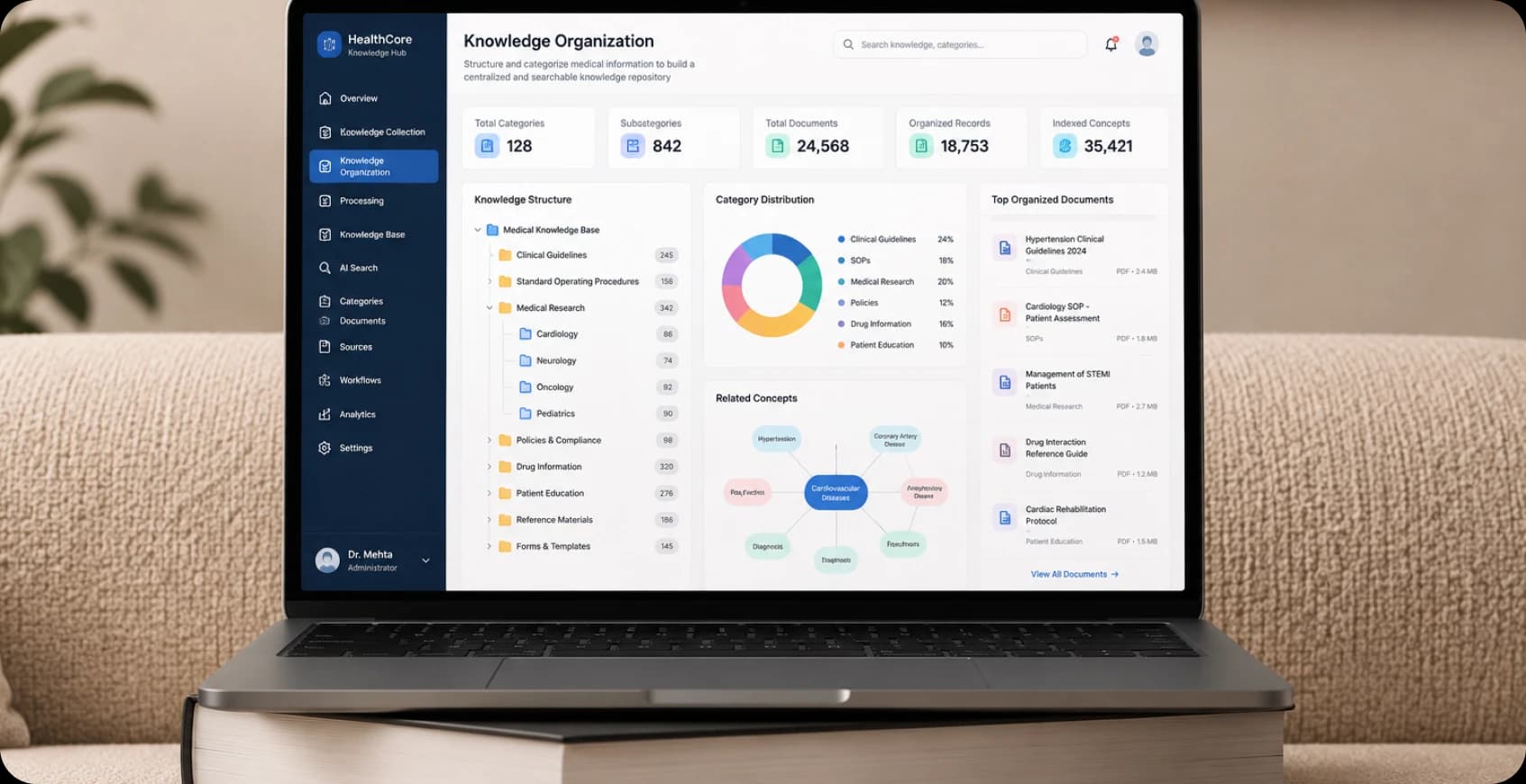
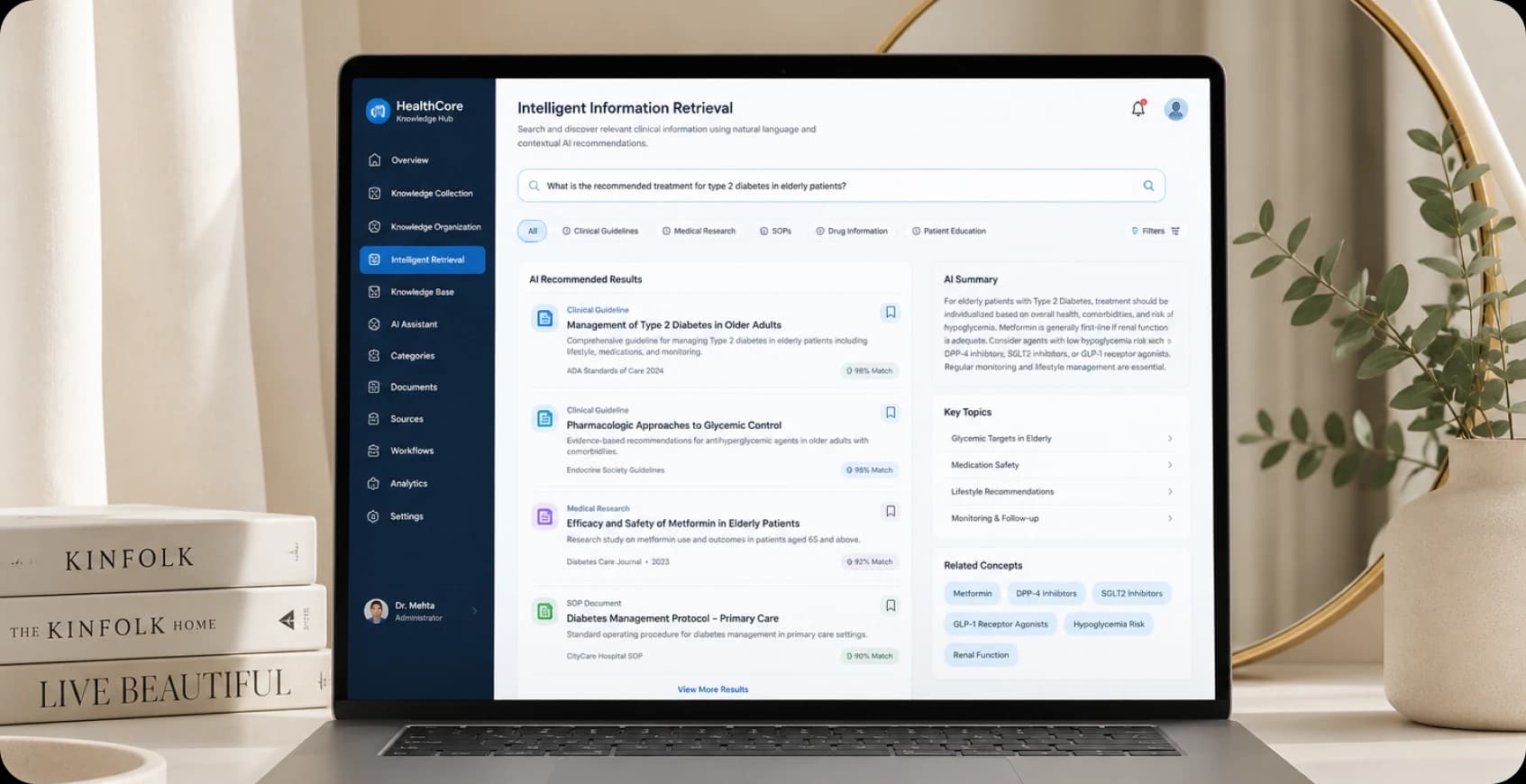
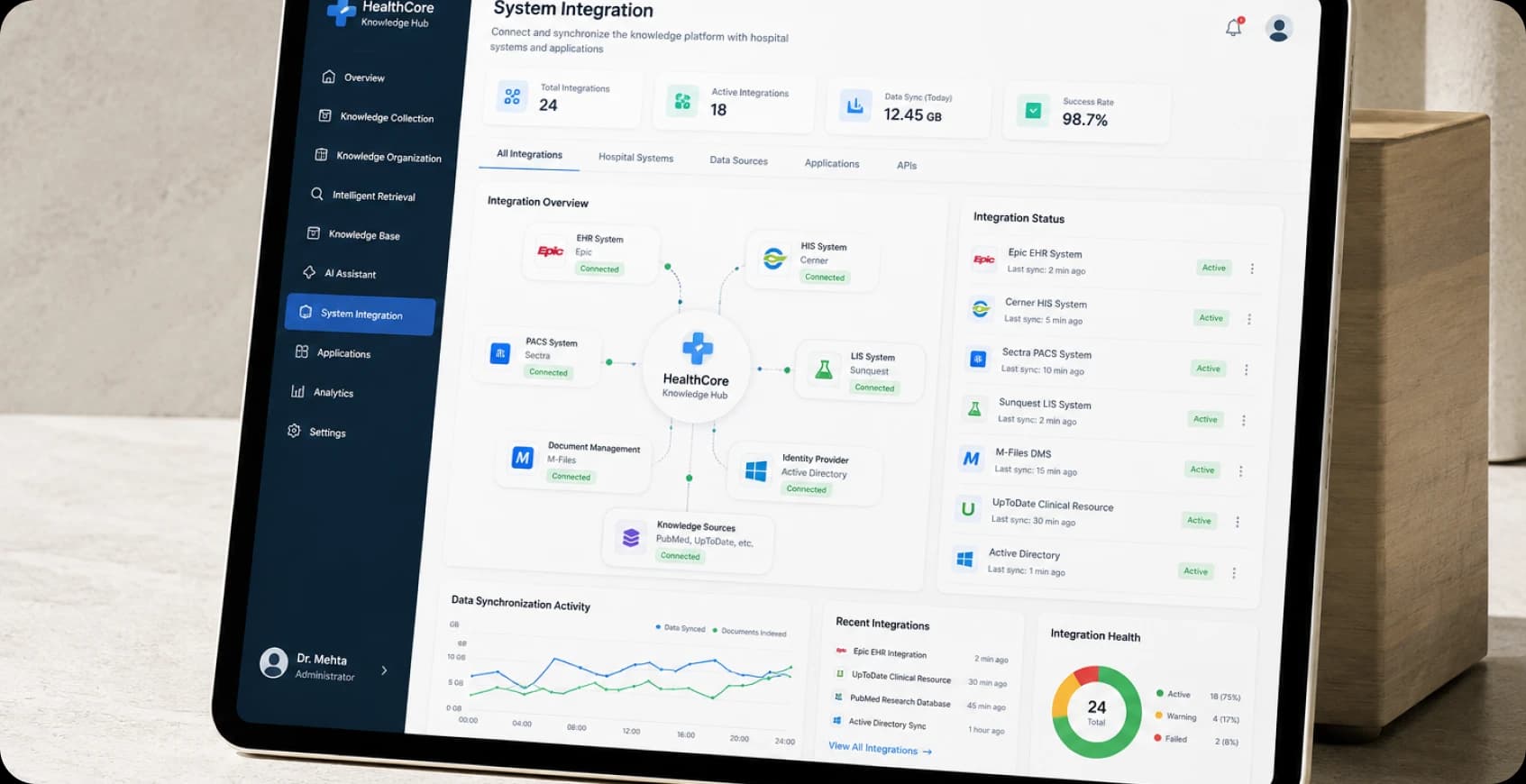
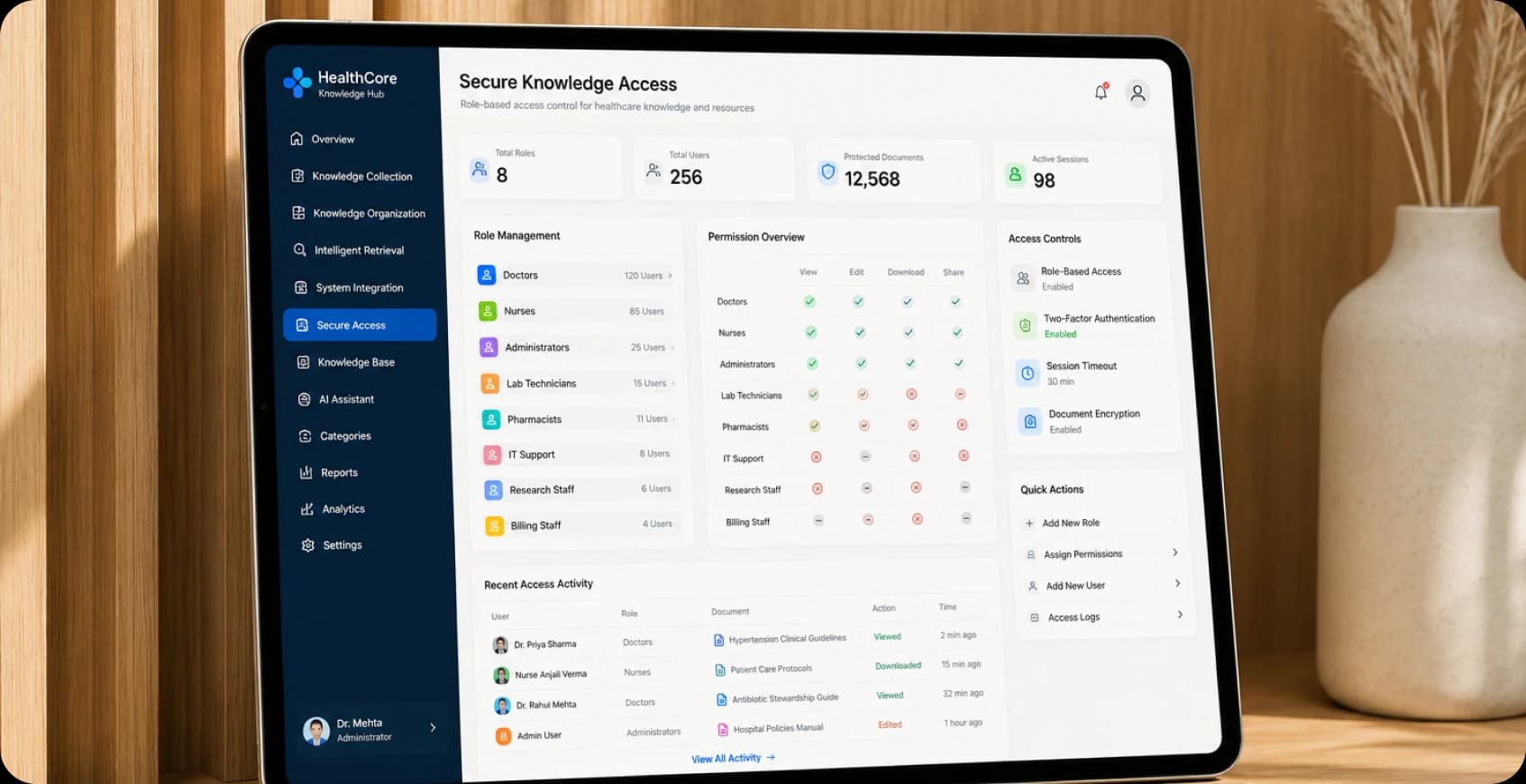
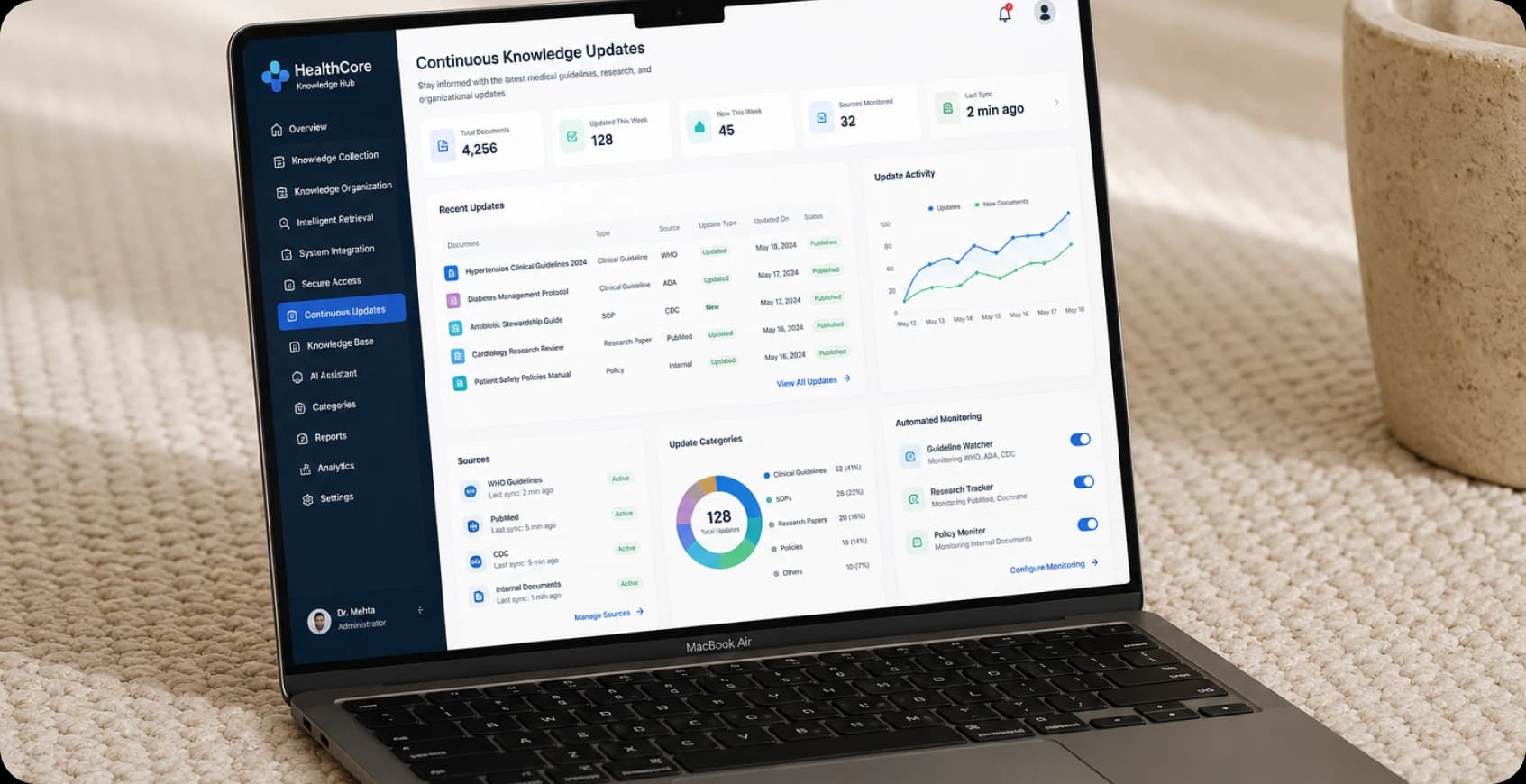
Starling Elevate organized clinical knowledge from multiple healthcare sources into one searchable hub with role-based access for doctors, nurses, and administrators.
Steps
What We Delivered
Starling Elevate delivered a centralized clinical knowledge platform with intelligent search, guideline repositories, and an analytics dashboard for healthcare teams.
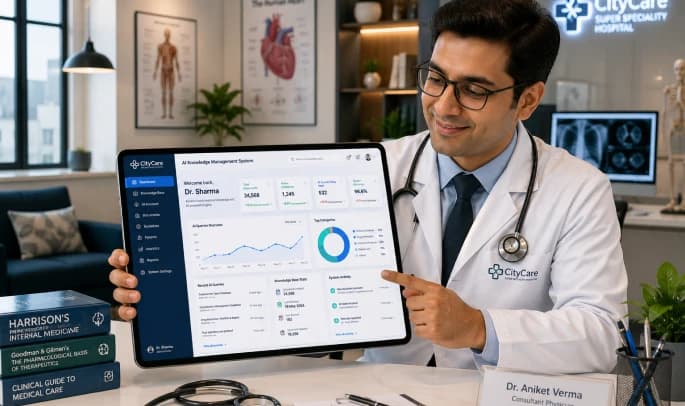
Care teams found clinical information faster, improved cross-department sharing, and gave healthcare professionals a shared source of trusted medical content.
Results &
Business
Impact
The organization reported faster clinical decision support, clearer content governance, and stronger knowledge sharing between healthcare departments.
Faster Access to Clinical Knowledge
Improved Clinical Decision Support
Better Knowledge Sharing Across Healthcare Teams
Reduced Time Spent Searching for Medical Information
Standardized Access to Clinical Guidelines
Increased Operational Efficiency
Scalable Enterprise Knowledge Management
The Future of AI Knowledge Management in Healthcare
Healthcare knowledge platforms are moving toward smarter search, automated evidence updates, and AI assistants that understand clinical context. Organizations that invest now can scale knowledge quality without adding manual curation headcount.
AI-Powered Clinical Knowledge Assistants
Real-Time Medical Knowledge & Evidence Updates
Context-Aware Clinical Decision Support
Final Summary
Over seven months, Starling Elevate built an AI knowledge management system for a healthcare organization in the UK. Knowledge graphs, RAG, LLMs, and workflow automation connected clinical guidelines, treatment protocols, and research content so care teams could search in plain language and see related medical resources in one place.
The release included role-based access controls, EHR and hospital system integrations, and continuous content ingestion. Teams reduced search time, improved document reliability, and gave healthcare professionals a shared source of trusted clinical knowledge.
Frequently asked Questions
Didn't get an answer?
We will reach out to you in less than 2 hours!
An AI knowledge management system for healthcare centralizes clinical guidelines, treatment protocols, research papers, and institutional documents in one searchable platform. Starling Elevate built a solution where doctors, nurses, and administrators ask questions in natural language and receive answers grounded in approved medical content.
The platform used knowledge graphs for connected content retrieval, RAG for grounded answers, large language models for natural-language responses, and workflow automation for content ingestion and updates across clinical repositories.
Starling Elevate delivered this AI knowledge management system over a seven-month engagement for a UK-based healthcare organization, covering ingestion pipelines, content structuring, search tuning, access controls, and analytics dashboard work.
The knowledge hub connects with electronic health records, hospital systems, and internal healthcare applications already in use. Users search from one portal while content stays synchronized through API integrations and automated ingestion workflows.
The platform applies role-based permissions so doctors, nurses, and administrators see only the guidelines, documents, and resource types their role allows. Administrators manage ingestion, tagging, and access rules from a central governance dashboard.
The client reduced time spent searching for clinical information, improved cross-department knowledge sharing, standardized access to treatment guidelines, and supported faster clinical decision-making with more reliable medical document access.
Didn't get an answer?
We will reach out to you in less than 2 hours!

Transform Healthcare Knowledge with AI
Centralize clinical knowledge and improve information access with AI.